Santa’s Elves
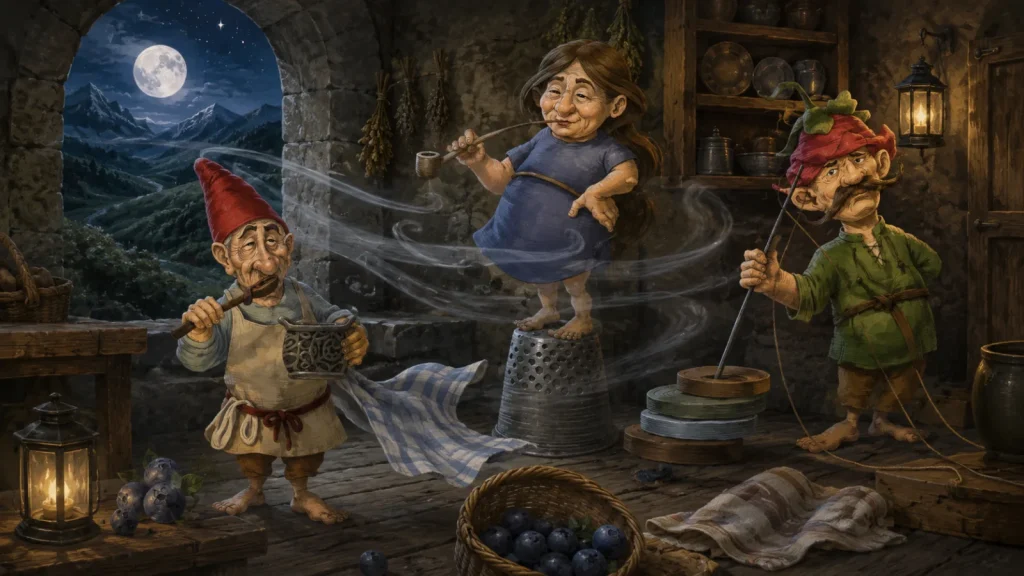
No one ever thinks that Santa Claus does it all on his own. Behind him is a whole community of little helpers who work twelve months just for a single night. But elves aren’t just a fantasy: they’re the name we’ve given to a beautiful idea—that of someone who works quietly all year long to make sure everything is ready for Christmas. And it’s a more real idea than it seems.
When it comes to elves, we’re usually interested in just one thing: what their names are. But the real questions are different. Why does Santa Claus need helpers? Where did the idea of a toy factory at the North Pole come from? And, above all: what do the elves do during the eleven months when no one is thinking about Christmas? Answering these questions means discovering that, deep down, that factory isn’t all that imaginary.
Why does Santa Claus need elves?
The answer is deeper than it seems. A Santa Claus who does everything on his own would be a magician: all he’d have to do is snap his fingers. The elves, on the other hand, convey a different idea of Christmas—one in which magic isn’t created out of thin air, but is built. It takes time, it takes hands, it takes a workshop. Elves exist because, in our imagination, gifts don’t just appear: someone makes them. It’s a fairy tale, of course, but it’s also the most honest fairy tale of all, because it closely resembles reality.
From Spirits to Workers: The Double Life of Elves
Elves have two origins that are very far apart. The first is Nordic: the Swedish Tomte and the Danish Nisse, the spirits that protected the farm (we’ve written elsewhere about their mischievous cousins, such as the Tuscan Buffardello). But those spirits were protectors; they didn’t produce anything. The toy-making elf is a much more recent invention—and an entirely American one.
It was primarily a cartoonist, Thomas Nast, who, between 1860 and 1880, shaped the image of Santa Claus as we know him in the pages of a newspaper: the beard, the red suit, the house at the North Pole, and—a crucial detail—a workshop full of little helpers. A few years earlier, in 1869, the book *Santa Claus and His Works*, illustrated by Nast himself, had already depicted that workshop; and even earlier, in 1856, the future author of *Little Women*, Louisa May Alcott, had been among the first to imagine elves as Christmas helpers. From farm spirits to factory workers: the elves had changed professions.
What do elves do all year round?

Here’s the question kids ask that grown-ups can’t quite explain. Elves don’t work at Christmas—they work for Christmas, and they do it all year round. While we’re at the beach, they’re carving; while we’re gathering chestnuts, they’re painting; and by the time the first cold snap hits, most of the work is already done. In our imagination, the North Pole factory has its own departments: some design, some build the molds, some paint by hand, some check that every piece is perfect, and some wrap the gifts. Does that remind you of anything? It does for us—it reminds us of a very real place.
Did you know that?
Santa Claus’s workshop at the North Pole isn’t an old institution: it didn’t exist before the 19th century. It was invented by the illustrator Thomas Nast, who gave Saint Nicholas a home, a workshop, and an army of helpers. Until then, the saint of gifts simply traveled around—he had neither an address nor any employees.
Behind every object that makes Christmas magical, there’s someone who worked on it when it was still summer outside. Elves, after all, are the name we’ve given to those hands.
So what are elves called?
There is no official, universal list: each story has created its own characters. The most famous is Hermey, the elf who wanted to be a dentist in the 1964 animated Rudolph special. In more recent collections, names that have become almost canonical appear— Alabaster Snowball, the archivist; Bushy Evergreen, the inventor of the sleigh; Pepper Minstix, the village guardian; Shinny Upatree, the elder. Funny names that evoke snow and wood—but none of them, in reality, is “the real one.” Because elves, like all beautiful ideas, belong to those who tell their stories.
Elf on the Shelf: A Tradition That Started Yesterday
There is one elf, however, who has a specific birthdate: 2005. That year, Carol Aebersold and her daughter Chanda Bell published a book accompanied by a little figurine: an elf who watches over children during Advent, flies to the North Pole every night to report back, and is found in a different spot in the house every morning (because parents secretly move him). In twenty years, it has become a global tradition, embraced by millions of families. Proof that a Christmas tradition can spring from nothing—and that there’s always room for a new one.
The elf factory really does exist—and it’s in Florence

And that brings us to the point. Because a factory where people work all year round to prepare for Christmas—with some designing, others making the molds, and still others hand-painting every face—actually exists. Except it’s not at the North Pole: it’s in Florence, and it’s called Moranduzzo. Since 1946, Italy’s first Christmas decoration factory has been doing exactly what the elves do in fairy tales: creating magic while it’s still summer outside, so that homes can be lit up in December.
In its heyday, the company employed over 1,500 workers: an entire village of “elves”—each with a first and last name—who still hand-paint the figurines in the Landi line and prepare the decorations you’ll find under the tree. The truth is simple and a little touching: elves do exist. They’ve just swapped the North Pole for Tuscany, and their pointed ears for eighty years of craftsmanship.
Decorations and Ornaments
The Work of Florence’s “Elves”
Decorations and nativity scenes crafted by hand year-round by Italy’s first Christmas decoration factory. Because, after all, the magic of Christmas is rooted in craftsmanship.
Frequently Asked Questions About Santa’s Elves
What are Santa’s elves called?
Why does Santa Claus need elves?
What do elves do all year round?
Who invented Santa’s factory at the North Pole?
What is Elf on the Shelf?
Elves are nothing more than this: the affectionate name we give to those who work all year long so that, for one night at Christmas, it seems as if magic has happened. And if someone really does that, perhaps elves have never been just a fairy tale.
Moranduzzo — The Christmas Factory Since 1946 — Florence